A great home theater is not just about buying a big TV. It is about the complete experience — the image quality, the sound that moves around you, the darkness that blocks distractions, and the control system that makes it effortless to use. After 15 years installing home theaters across Raleigh, Cary, and the Triangle, here is what we have learned about what actually matters.
1. Start With the Room
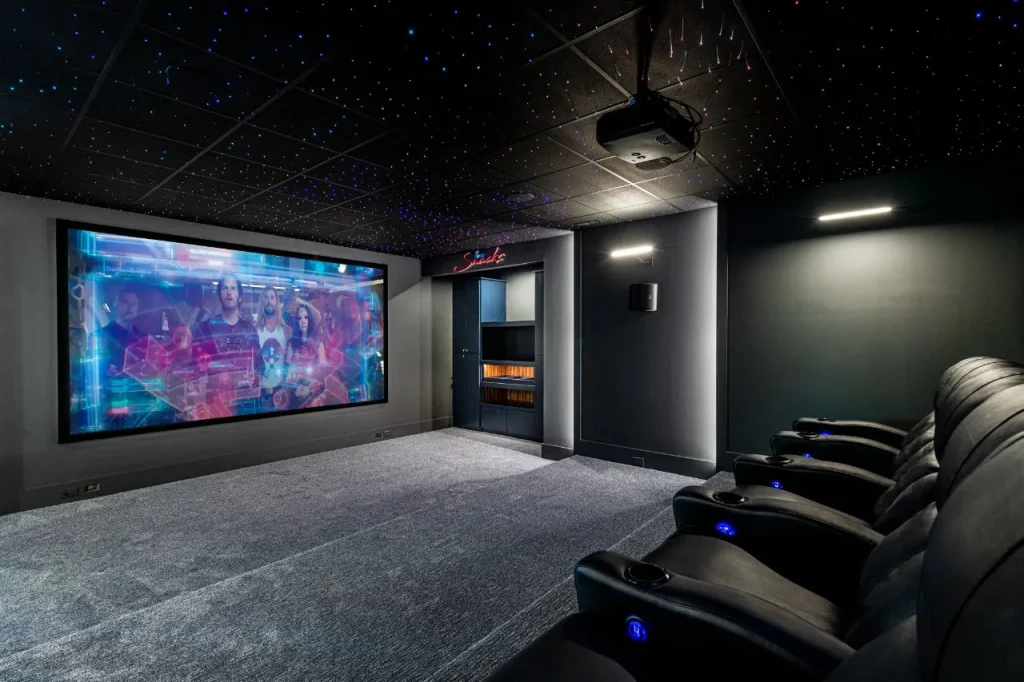
The room is the foundation of everything. A dedicated, light-controlled room will always outperform a shared living space no matter how much you spend on equipment. The ideal home theater room is roughly rectangular, 12–16 feet wide and 18–22 feet long. Avoid rooms with lots of windows, open floor plans, or parallel hard surfaces — all of these hurt sound quality.
If you are in a new construction home in Apex, Wake Forest, or a Cary custom build, now is the time to plan. A dedicated theater room prewired during framing costs a fraction of what it costs to retrofit later. We work with builders across the Triangle to rough-in the room correctly from the start.
2. Choose Your Display: Projector vs. Large-Format TV
This is the first big decision. Both options work well when matched to the right room.
- 4K Laser Projector: Best for dedicated rooms with controlled light. Screen sizes of 100–150 inches are achievable at a fraction of TV cost. Laser projectors last 20,000+ hours with no lamp replacement. Brands like Sony, Epson, and JVC offer stunning image quality starting around $3,000.
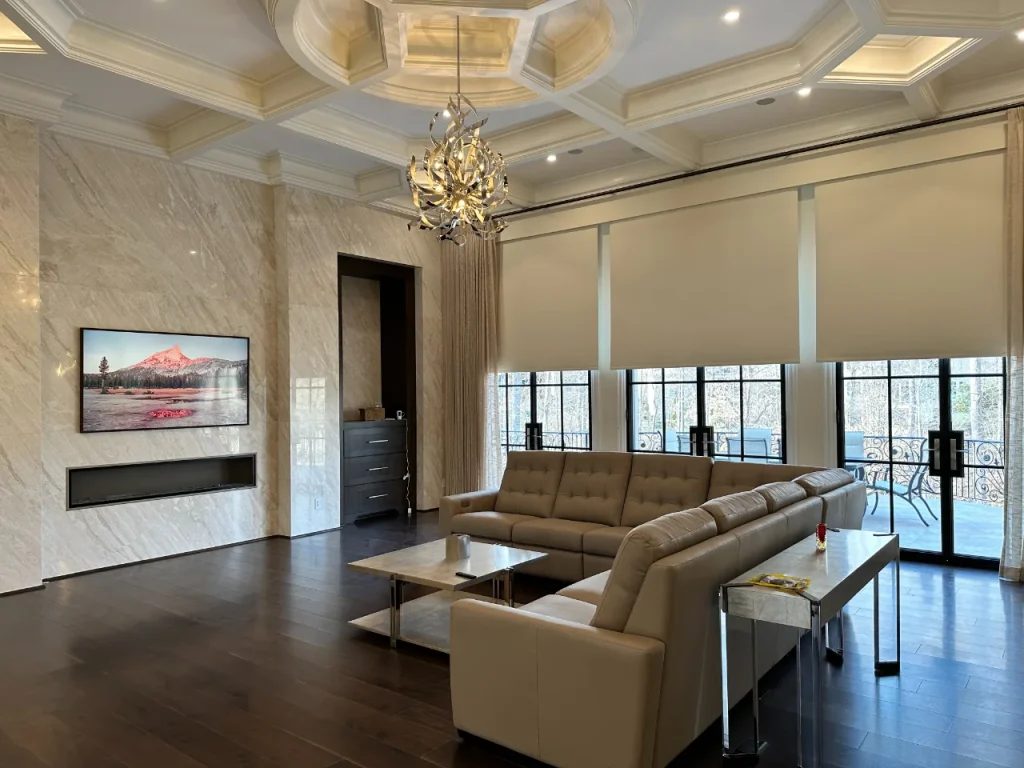
- Large-Format TV (85–98 inch): Best for rooms with some ambient light, or where the space also serves other purposes. Samsung, LG OLED, and Sony are the leaders. Much simpler installation — no screen, no throw distance calculation. Starting around $2,500–$6,000.
For a true cinematic experience in a dedicated room, we recommend a 4K laser projector paired with a motorized acoustic screen. For a bonus room or flex space doubling as a theater, a large-format TV usually wins on practicality.
3. Sound Makes the Experience
Ask anyone who has sat in a well-designed Dolby Atmos theater: the sound is what makes the room feel real. The standard we recommend is a 5.1.4 configuration — five speakers at ear level, one subwoofer, and four height channels in the ceiling. This gives you true overhead audio for movies like Top Gun: Maverick or Dune.
- Left, Center, Right: High-quality tower or in-wall speakers at the front of the room, aligned with the screen
- Surround Speakers: In-wall or on-wall speakers at the sides or rear, at ear level when seated
- Height Channels: In-ceiling speakers angled toward the listening position for Atmos overhead effects
- Subwoofer: One or two subs placed for even bass distribution across all seats
Speaker brands we install regularly: Martin Logan, Sonance, JBL Synthesis, and Polk Audio. A well-calibrated $8,000 speaker system in a treated room will outperform a $30,000 system in an untreated room every time.
4. Acoustic Treatment Is Not Optional
This is the most overlooked element in home theater design. Hard walls cause sound to bounce, creating echoes and muddy bass. Proper acoustic treatment — absorption panels on the side walls, bass traps in the corners, and diffusion at the rear — can transform a mediocre-sounding room into something exceptional.
We work with acoustic designers on higher-end projects to calculate the precise placement and thickness of panels. For most projects, a combination of carpet, upholstered seating, and well-placed panels gets you 80% of the way there.
5. Lighting Control Makes or Breaks the Experience
A home theater needs layered lighting: ambient lighting for when the room is used normally, bias lighting behind the screen to reduce eye strain, and a blackout mode for movie time. Lutron RadioRA 3 or HomeWorks scenes let you program "Movie Time" — lights dim to exactly where you want them, the screen descends, and the receiver powers on, all with a single tap.
We also strongly recommend motorized blackout shades on any windows. Even a small amount of ambient light from outside washes out projector contrast. Lutron Palladiom motorized shades integrate directly with the theater control system and close automatically when you start a movie.
6. Control System: The Glue That Ties It Together
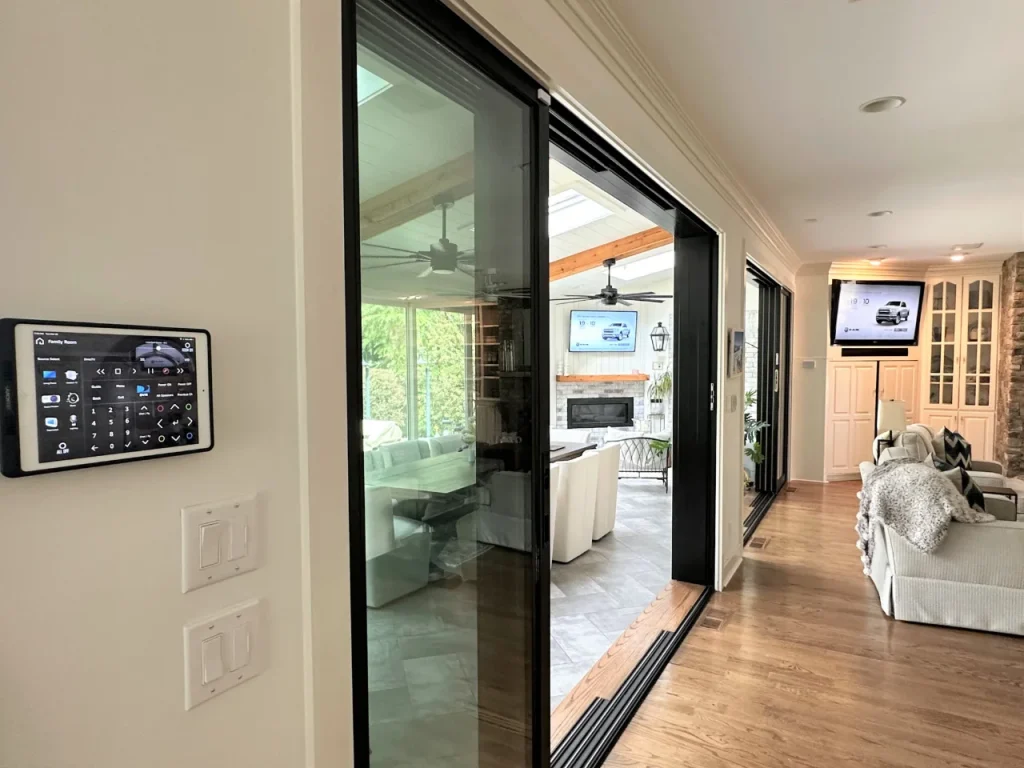
A properly designed home theater should be operable by anyone in your household with a single button press. RTI systems coordinate every device — projector, receiver, streaming player, lighting, shades, and HVAC — into logical scenes. "Movie Time" starts everything. "Pause" dims lights slightly. "Done" shuts everything off cleanly.
Without a control system, you end up with five remotes, a sequence of steps that only you know, and a room that intimidates guests.
Planning a Home Theater in Raleigh, NC?
Creative Mind Technologies has designed and installed home theaters throughout Raleigh, Cary, Apex, Wake Forest, and the Triangle for over 15 years. We handle everything from room design through final calibration.
Get A Free ConsultationWhat Does a Home Theater Cost in Raleigh?
Budgets vary widely based on scope. Here is a realistic breakdown:
- Entry-level media room ($8,000–$18,000): Large-format 4K TV, 5.1 surround sound, basic seating, universal remote
- Mid-range dedicated theater ($20,000–$50,000): 4K laser projector, 7.1.4 Atmos sound, acoustic treatment, tiered seating, Lutron lighting, motorized screen
- Premium cinema room ($60,000–$150,000+): Reference-grade projector, JBL Synthesis or Martin Logan Atmos system, custom acoustic design, 4K media server, full RTI automation
The best investment at any budget is proper room preparation and speaker placement. Equipment can be upgraded later. Walls cannot.