When clients in Raleigh ask us about whole-home audio, the conversation almost always comes down to two platforms: Sonos and CasaTunes. Both stream music to every room in your home. Both work with the same in-ceiling speakers. Both have clean apps. But they are built for fundamentally different types of installations — and choosing the wrong one will leave money on the table, or features unused. Here is how we actually think about it, from the perspective of an integrator who has installed both across hundreds of Triangle homes.
What Is CasaTunes?
CasaTunes is a whole-home audio server designed from the ground up for professional installation. At its core it is a network-based streaming appliance — the audio brain of your home — that simultaneously pulls from Spotify, Apple Music, Tidal, AirPlay sources, internet radio stations, and local music libraries, and routes each independently to any zone in the house at independently controlled volumes. Kitchen plays Spotify. Back patio plays Apple Music. Master bath plays a local playlist. All at the same time. All from one box.
CasaTunes is not sold at Best Buy. It requires a dealer to configure and program it, including integration with smart home platforms like RTI. That is a feature, not a limitation: the system is built around your home and your family’s habits rather than a generic consumer setup. At Creative Mind Technologies, CasaTunes is our primary recommendation for homes where whole-home audio is part of a broader smart home automation system.
What Is Sonos?
Sonos is the consumer audio ecosystem that transformed how people think about wireless multi-room audio. The Sonos app is genuinely excellent — clean, intuitive, and fast. The platform supports Spotify, Apple Music, Tidal, Amazon Music, and dozens of other services natively. The Sonos Amp ($699 per zone) powers passive in-ceiling speakers and slots into the Sonos ecosystem seamlessly.
Where Sonos excels is simplicity and DIY-friendliness. A homeowner can buy a Sonos Amp, plug it in, and have it online in under ten minutes without a dealer. Adding a new room later requires buying another Amp and tapping a button in the app. That frictionlessness is real and valuable for the right situation.
The Real Differences: A Head-to-Head Breakdown
Control App and Physical Interfaces
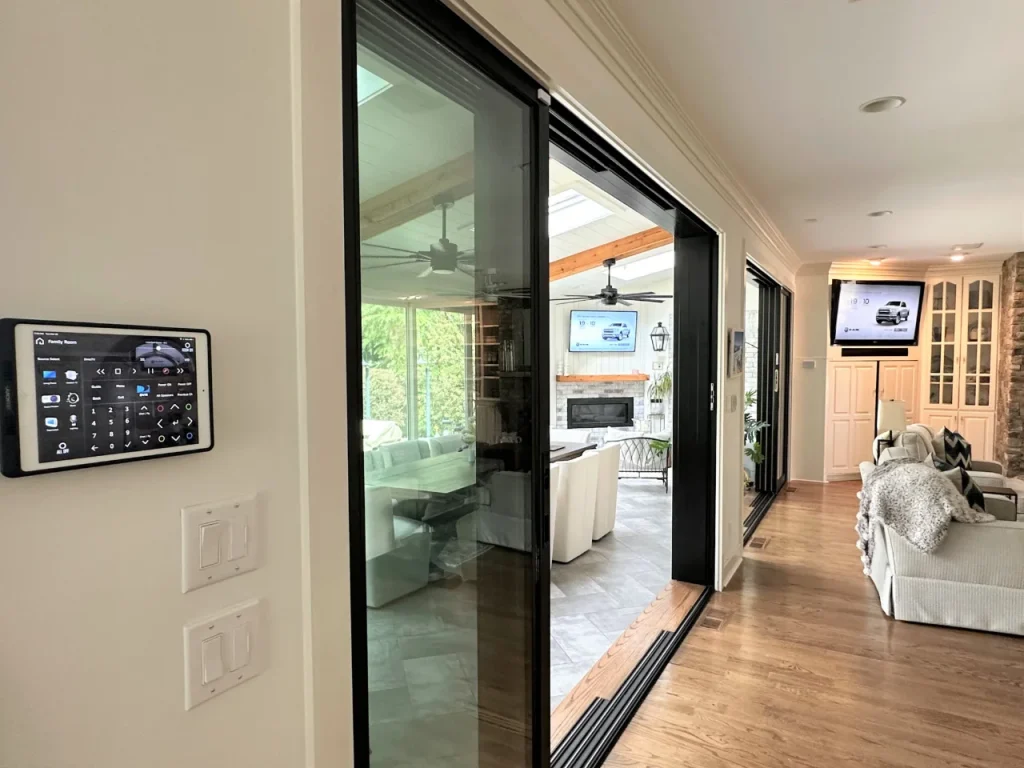
Both platforms have good smartphone apps. CasaTunes has a material advantage for whole-home installations: it integrates natively with RTI automation systems, meaning your audio controls live on the same RTI touchscreen or handheld remote that controls your lighting, shades, and televisions — no switching apps. In a full smart home, that integration changes the daily experience of the system. Sonos lives entirely in its own app ecosystem, which is excellent for audio-only households but is a step down in a unified control environment.
Smart Home Integration
This is where the gap opens widest. CasaTunes was built with professional integrators in mind, and its API integration with RTI is deep and stable. A CasaTunes zone can be included in any RTI scene — “Good Morning” starts your kitchen playlist at 30 percent volume while it raises the shades and adjusts the Lutron lighting. “Movie Night” pauses all audio in the house and hands control to the theater system. Sonos can be incorporated into RTI using third-party drivers, but it is less reliable, and scene-based control is a step down from CasaTunes’ native integration. For homes built around a smart home platform, CasaTunes wins this category by a significant margin.
Multi-Source Streaming
CasaTunes streams completely different sources to every zone simultaneously — Spotify in the kitchen, Apple Music on the back patio, a local playlist in the master bath, internet radio in the gym, all at once, each independently controlled. Sonos can do this too, but it requires multiple accounts or careful grouping management, and it gets cumbersome above five or six zones. At eight, ten, or twelve zones, CasaTunes manages multi-source audio more cleanly than any consumer platform.
Speaker Compatibility
This one is a draw. The Sonos Amp drives any standard passive in-ceiling or in-wall speakers. CasaTunes does the same. Neither platform locks you into proprietary speakers. We pair both systems with Sonance Architectural Series for high-end installs, Klipsch in-ceiling speakers for strong mid-budget performance, and Polk Audio Reserve for value-conscious rooms. The speaker is what you hear — the platform is just the engine.
Zone Scalability
CasaTunes supports up to 18 independent zones from a single server with individual source and volume control per zone. Sonos scales to any number of Amps, but managing more than eight to ten zones in the Sonos app starts to feel unwieldy. For large Raleigh and Wake Forest homes with multiple outdoor zones, a detached pool house, a dedicated gym, a bonus room, and a dedicated theater — CasaTunes manages the complexity more cleanly.
Expandability Without a Dealer
Here Sonos has a clear advantage. Adding a zone to an existing Sonos installation means buying another Amp, adding it to the app, and connecting speakers — no dealer required, no service call. Adding a zone to a CasaTunes system requires a configuration change by the integrator. For homeowners who want to build out incrementally without scheduling visits, Sonos wins this category.
Long-Term Platform Reliability
CasaTunes is a professionally maintained system on controlled firmware. Updates are vetted; nothing changes in your interface without your integrator evaluating it. Sonos pushes updates to consumer devices automatically — the 2022 app controversy, where Sonos replaced the previous interface with a redesigned version that removed features, was a real reminder that consumer companies make consumer decisions on their own timeline. The current Sonos app has largely recovered, but it is a relevant consideration for a system you are planning to live with for ten or fifteen years.
Not Sure Which System Fits Your Home?
We install both CasaTunes and Sonos across Raleigh, Cary, Apex, Wake Forest, and the Triangle. Tell us about your home — zone count, smart home integration needs, and budget — and we will recommend the right platform with no upsell pressure.
Explore Whole House AudioWhich System Is Right for You? Real-World Scenarios
The right answer depends on how your audio system fits into the rest of your home technology. Here is how we actually frame it for clients across the Triangle.
Scenario 1: New 5,000 sq ft construction in North Raleigh with a full RTI smart home, 10 audio zones including covered porch and pool area.
→ CasaTunes. The RTI integration, multi-source streaming, and zone count make it the natural fit. The audio system becomes part of the smart home, not a separate app running beside it.
Scenario 2: Existing Apex home, three rooms need music, homeowner is tech-comfortable and wants to add rooms over time at their own pace.
→ Sonos. Three Sonos Amps driving in-ceiling speakers, installed and configured by CMT. Excellent out of the box, easy to expand independently. No server, no complexity.
Scenario 3: Cary luxury renovation, eight zones, Lutron RadioRA 3 lighting control, motorized shades, RTI whole-home automation.
→ CasaTunes. The Lutron and RTI integration, combined with the zone count and multi-source requirements, makes CasaTunes the right call in a professionally managed whole-home system.
The rule of thumb: if your audio is part of a broader smart home automation system, CasaTunes is almost always the better platform. If audio is standalone and you value simplicity and independent expandability, Sonos is an excellent choice that we install and support confidently.
What About the Speakers?
Both platforms drive standard passive in-ceiling speakers — the selection is entirely about the room, the budget, and the performance target. We routinely pair CasaTunes and Sonos Amp with the same speaker lines: Sonance Architectural Series disappears into the ceiling so completely that guests cannot find the speakers; Klipsch in-ceiling speakers deliver strong dynamics and efficiency at mid-budget; Polk Audio Reserve offers excellent value in utility rooms and secondary zones. Every installation includes proper amplifier sizing, impedance matching, and placement geometry to ensure even coverage with no hot spots or dead zones. The platform does not determine what you hear — the speaker installation does.
For outdoor zones in North Carolina’s climate — the heat, humidity, and occasional ice storms — we specify outdoor-rated speakers from Sonance Outdoor and Klipsch AW series, all rated for year-round exposure. A properly run speaker wire during construction costs a fraction of what a retrofit through finished walls does — if you are building or renovating, that is the most important decision you can make about your audio system.
What Does Whole-Home Audio Cost in Raleigh, NC?
Here are realistic installed price ranges for the Triangle market, including equipment, in-ceiling speakers (two per room), labor, and basic configuration:
- Sonos — 4-zone system: $7,000–$9,500
- CasaTunes — 4-zone system: $9,000–$13,000
- Sonos — 8-zone system: $12,500–$17,000
- CasaTunes — 8-zone system: $14,000–$20,000
- CasaTunes — 12+ zone system with outdoor: $20,000–$32,000
New construction with prewired speaker runs during framing brings labor costs down significantly; retrofit through finished walls in existing homes pushes toward the high end of each range. CasaTunes costs more upfront primarily because of the server hardware and the custom programming that makes RTI integration work seamlessly. The gap narrows as zone counts increase and as the value of a unified smart home interface is factored in.
Ready to Talk Whole-Home Audio?
Call us at 914-319-3570, email Sales@CreativeMindLLC.com, or fill out our contact form for a free consultation. We serve Raleigh, Cary, Apex, Durham, Wake Forest, Chapel Hill, Morrisville, and the entire Triangle.
Get A Free QuoteFrequently Asked Questions
Can I run CasaTunes and Sonos in the same home?
Yes, but we generally do not recommend it. Running two separate audio platforms creates two app experiences and two points of support. The exception: if you already have Sonos in a few rooms and are adding a larger RTI-integrated system, we can keep the existing Sonos zones in place and add CasaTunes for the new areas. We have done this in several Raleigh-area homes and it works well with careful zone planning.
Does CasaTunes work if the internet goes down?
Yes. CasaTunes can still play local music libraries and AirPlay sources from local devices on your home network when the internet is out. Streaming services — Spotify, Apple Music, Tidal — require internet connectivity. But your local library, AirPlay from a locally connected device, and any direct audio input remain available. For clients who want zero dependency on internet uptime for their music, we configure a local NAS with their library as a fallback source.
Can Sonos integrate with an RTI smart home system?
Sonos can be controlled through RTI using third-party integration drivers, but the experience is not as deep or reliable as CasaTunes’ native RTI API. Basic transport controls — play, pause, volume up and down, source selection — work reasonably well. Scene-based control (triggering specific playlists or stations as part of an RTI scene) is less stable and requires more ongoing maintenance. For homes where RTI is the primary control interface, CasaTunes produces a measurably better daily experience.
Which system sounds better — Sonos or CasaTunes?
Neither platform determines sound quality — the speakers and amplification do. Both CasaTunes and Sonos Amp drive standard passive in-ceiling speakers; the signal chain from there is identical. A CasaTunes system with budget speakers will sound worse than a Sonos Amp driving premium Sonance in-ceiling speakers. We size the full signal chain — amplifier output, speaker sensitivity, impedance, room volume — on every installation to ensure each zone performs correctly. The platform is not the variable; the speaker installation is.
Does Creative Mind Technologies install both Sonos and CasaTunes?
Yes. We are experienced with both platforms across the Triangle and have no brand preference or incentive to push one over the other. During your consultation we assess your home’s zone count, layout, smart home integration requirements, and budget, then recommend the platform that genuinely fits. We design the speaker layout, handle all wiring, configure the system, and provide ongoing support for either platform. Call us at 914-319-3570 or reach out online to get started.